A person’s mindset is their perspective or thought process that shapes their approach to challenges and opportunities, and can significantly impact their happiness and success.
There are various types of mindsets and they are influenced by personal beliefs, values, and experiences, as well as external factors like culture, upbringing, and the people one surrounds themselves with.
Mindsets can also affect one’s overall outlook on life, with a positive mindset leading to a more optimistic view and a negative mindset resulting in a more pessimistic perspective. Habits can also reinforce a person’s mindset.
The Agile Mindset
At its core, agile is a mindset. It is about being flexible and constantly adapting to change. This means being able to respond quickly and effectively to new information and changing circumstances. Agile thinking is all about being proactive rather than reactive, and it’s this mindset that can help you be more successful in any area of your life.
These are broken down into three core beliefs
The Complexity Belief
In today’s world, many of the challenges we face are complex adaptive problems. These types of problems are difficult to solve because they are constantly changing and evolving. Yet we often try to do just that, applying tried-and-true methods even when they no longer work. This is where the belief in complexity comes in: the recognition that a problem’s inherent complexity means that a one-size-fits-all solution is unlikely to be effective.
Instead, we need to take a more fluid and flexible approach, experimenting with different methods and seeing what works best in each situation. There is no silver bullet for solving complex problems; instead, it takes hard work and dedication to keep exploring new possibilities until we find a way forward. The belief in complexity is a reminder that the journey is often more important than the destination.
The People Belief
It is widely believed that individuals are both independent from and dependent on their teams and organisations. While it is true that individuals can accomplish great things on their own, research has shown that they are also more likely to succeed when working collaboratively with others.
If teams and indivduals are given the right environment, trust to self organise and a motivating purpose, they need to achieve their goals.
The Proactive Belief
In a constantly changing and increasingly complex world, the ability to be proactive is more important than ever. Proactivity is the belief that you can always be doing something to improve your situation, and it’s this relentless pursuit of improvement that sets proactive people apart. Proactivity is not just about taking action; it’s also about having a positive attitude and being open to new ideas.
Proactive people are always looking for ways to improve their skills and knowledge, and they never give up easily. They know that success depends on their own efforts, and they are willing to work hard to achieve their goals. Proactivity requires dedication and perseverance, but the payoff is worth it: proactive people are more successful and happier than those who are reactive.
You can read more about the Agile Onion here
Understanding the power of habit
A mindset is a collection of habits that we consistently engage in, whether they are beneficial or detrimental to us. It is up to us to decide if we want to change these habits. Carol Dweck’s concept of a growth mindset can serve as a model for understanding the different types of mindsets we may have and how they can be changed. Key factors in altering our habits and mindset include the environment we are in and the people we surround ourselves with. By understanding and addressing these factors, we can influence not only ourselves, but the direction our lives take.
Imagine that an individual wants to improve their time management skills. They have a growth mindset, so they believe that their abilities in this area can be developed and improved through effort and practice. Instead of feeling frustrated or overwhelmed by their current habits, they see this as an opportunity to learn and grow.
The individual might start by identifying specific time management habits that they want to improve, such as prioritizing tasks, setting clear goals, or avoiding distractions. They might also seek out resources and advice on how to improve these habits, such as attending a time management workshop or reading a book on the subject.
As they work on developing their time management skills, the individual with a growth mindset is likely to approach challenges and setbacks with a positive attitude. They might see a mistake or a missed deadline as a chance to learn and do better next time, rather than as a personal failure. They are also likely to be persistent in their efforts, continuing to practice and refine their habits even when it becomes difficult.
These habits can help the individual to make progress on important projects and meet their deadlines, which can lead to career advancement and success.
Similarly, if an individual wants to be more physically fit, they might create habits that support this goal. This could include exercising regularly, eating a healthy diet, and getting enough sleep. By establishing these habits, the individual is more likely to achieve their goal of improving their physical fitness and overall health.
Overall, creating better habits can lead to success by helping us to focus on the things that matter most to us and to consistently take the actions that will help us to achieve our goals.
You can read more about mindset in our blog
How to build your mindset
below are a list of resources that you might find helpful in changing how you see yourself and the world as you develop your habits and change your mindset
The 7 Habits of Highly Effective People
Author: Stephen R. Covey
The 7 Habits of Highly Effective People is a self-help book written by Stephen R. Covey that has become a widely popular and influential work on personal development and effectiveness. The book presents a holistic, principle-centered approach to personal and professional growth, and the seven habits that Covey proposes are intended to help readers achieve a greater level of effectiveness in their lives.

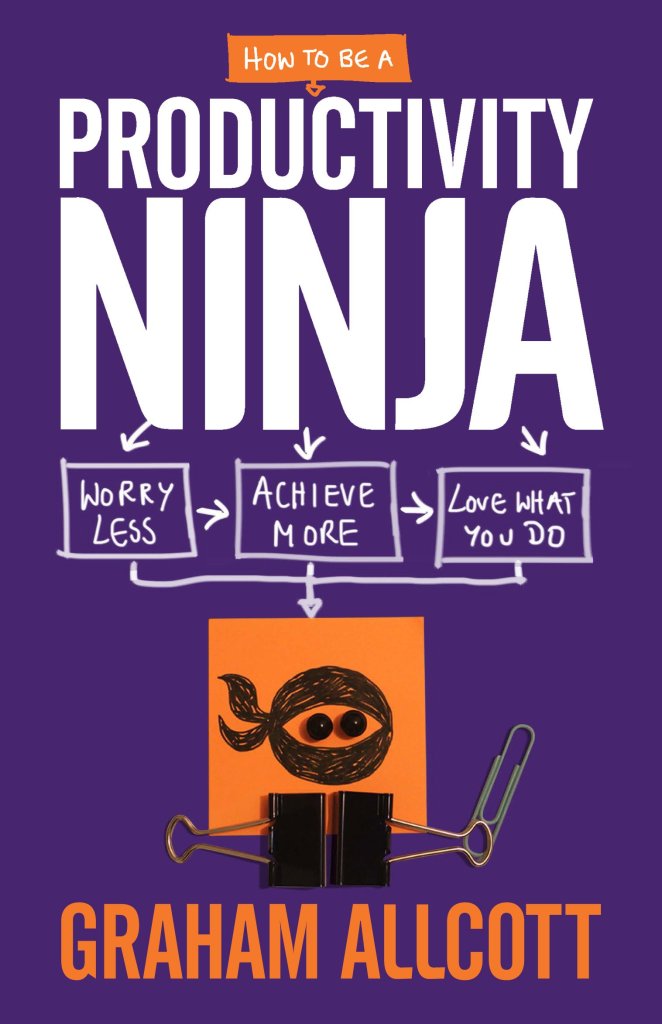
How to Be a Productivity Ninja
Author: Graham Allcott
How to Be a Productivity Ninja: Worry Less, Achieve More and Love What You Do is a book written by Graham Allcott that provides practical tips and strategies for increasing productivity and achieving success.
In the book, Allcott suggests that productivity is not about working harder or longer hours, but about working smarter and focusing on the most important tasks.
Find Your Why: A Practical Guide for Discovering Purpose for You and Your Team
Author: Simon Sinek
Find Your Why is written by Simon Sinek, David Mead, and Peter Docker. The book provides a framework for discovering and pursuing personal and organizational purposes, with the goal of creating more fulfilling and impactful work.
The authors argue that having a clear sense of purpose is essential for success and fulfillment, both for individuals and for organizations. They present a step-by-step process for finding one’s “why,” or the underlying reason for doing what we do.

Jim Kwik is a brain coach and expert in speed reading, memory improvement, and brain performance. He is the founder of Kwik Learning, a company that provides training and resources to help individuals improve their learning and memory skills.
Kwik has worked with individuals from all walks of life, including students, professionals, entrepreneurs, and celebrities. He has written several books on the topic of brain performance and has also appeared as a guest on numerous podcasts and television shows.
Through his work, Kwik aims to help people to learn faster, remember more, and unleash their full potential. He teaches a variety of techniques and strategies for improving brain function and performance, including speed reading, memory improvement, and brain-based learning. Kwik is known for his engaging and entertaining teaching style, and his goal is to help people to learn in a way that is fun and enjoyable.
Med School Insider: Pomodoro Technique
The Pomodoro Technique is a time management method developed by Francesco Cirillo in the late 1980s. It is based on the idea that frequent breaks can improve mental agility and increase productivity.
The Pomodoro Technique involves breaking down work into intervals, traditionally 25 minutes in length, separated by short breaks. These intervals are called “pomodoros.” After four pomodoros, a longer break of 15-30 minutes is taken.
The Pomodoro Technique can be used to manage a wide range of tasks and can be particularly useful for combating the tendency to multitask. It can also help to reduce the amount of time spent on distractions and unimportant tasks, as it encourages the user to focus on a single task for a set period of time.
To use the Pomodoro Technique, an individual can start by choosing a task to work on and setting a timer for 25 minutes. They should then work on the task until the timer goes off, at which point they should take a short break. This process is then repeated for a total of four pomodoros, after which a longer break is taken. The individual can then repeat this process as needed.
 Viking Agility